Tetiana Mohyl

Product Designer / Design Lead

I bridge the gap between abstract concepts and production-ready products. By building scalable design systems, I ensure that complexity never compromises user experience. I thrive on bringing structure to zero-to-one initiatives and am currently exploring new domains to impact.

Cross-functional Alignment Design System Governance Empathy-Led Design DesignOps Accessibility

Generalist by range, systematic by habit

I'm a generalist experience designer with nine years of hands-on practice. I enjoy turning messy, overlooked problems into polished solutions — and I'm always looking for new domains to learn.

Specialities

UX, user research, interaction & visual design, accessibility, usability testing, prototyping, information architecture, design systems, DesignOps, vibe coding.

Tools

Figma, Miro, Photoshop, Illustrator, After Effects, Maze, Zeplin, JIRA, Notion, Cursor, Claude.

Platforms

Web apps, native mobile (iOS, Android), websites, MS integrations.

Languages

  • Ukrainian — native
  • English — C1
  • Polish — B1
  • French — A2
  • Spanish — A2

Selected work

A condensed cut of the projects I'm most known for. Each case distils the essentials — context, my role, and the outcomes — across banking, defense, EdTech, and enterprise. Expand any one for more details.

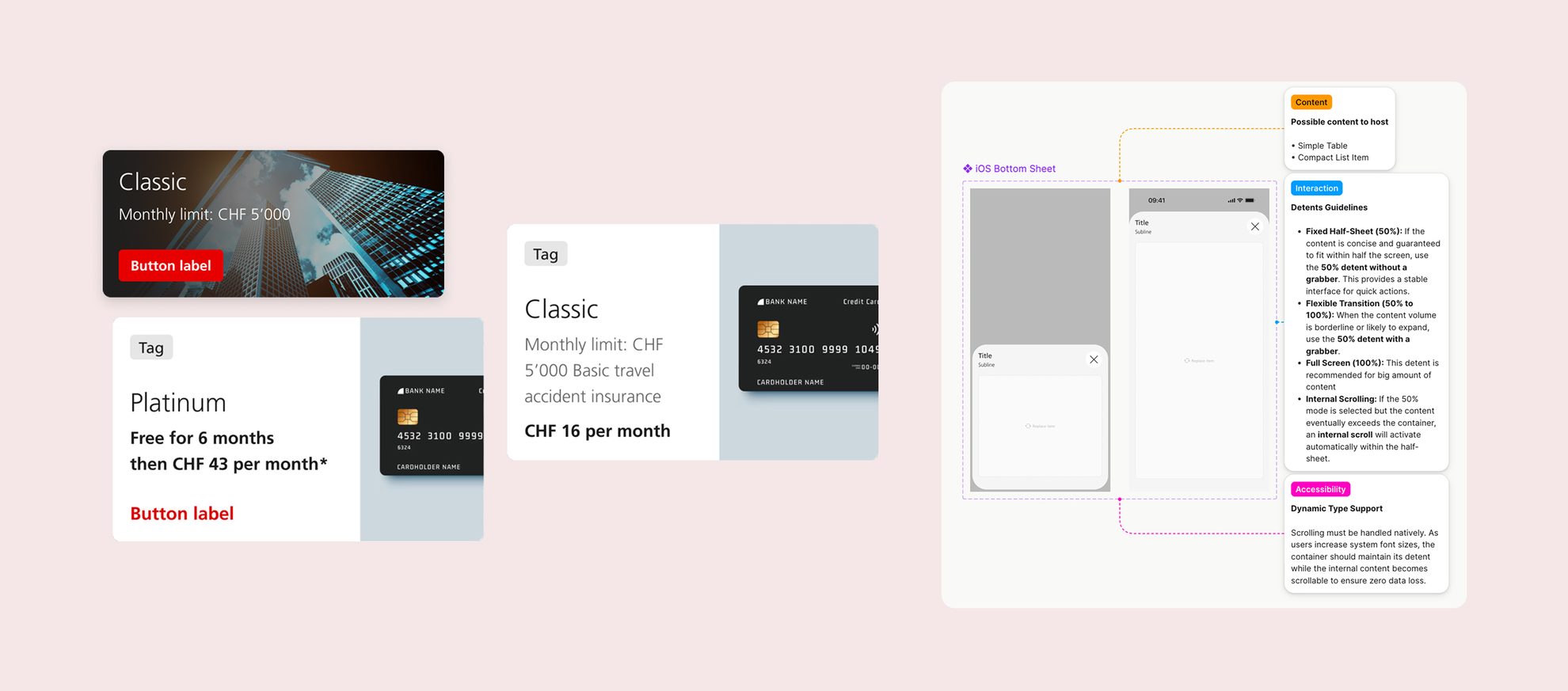
Classic card — image background variant Platinum card — image split variant Classic card — image split variant

Context

The bank was rolling out a large-scale visual rebrand while onboarding product teams that needed to migrate their components into the central system — all without disrupting the feature designers who relied on it every day.

Core challenge

Deliver a rebrand across 37 components and 20 patterns while keeping the system stable, well-documented, and actively adopted across a complex multi-team ecosystem.

Constraints

A security-first enterprise environment with strict review processes. Product teams are not allowed to customise components or patterns, so every element must be flexible enough to accommodate diverse needs while remaining fully universal.

Opportunity

Adapt a design system used by millions to reflect the new brand direction — driving adoption, reducing friction for feature teams, and establishing governance practices that scale.

My role

I joined the bank's internal team as an embedded design system designer, partnering with the Design Team Lead to handle both day-to-day component delivery and long-term library governance.

4M+
active clients impacted
20+
teams supported
3×2
brand directions × themes

As a Design System Designer

  • Co-maintained system architecture, documentation, and contribution guidelines across iOS and Android
  • Partnered with feature designers to drive adoption and resolve inconsistencies in the new visual language
  • Supported developers through implementation, accessibility compliance checks, and merge request reviews
  • Contributed to component-level accessibility work — auditing existing patterns, defining checklists, and ensuring each component met compliance standards before release
  • Led multi-theme adoption to support the full range of banking products

Results — first six months

37/20
components & patterns rebranded
12
iOS components moved to Liquid Glass with handoff docs
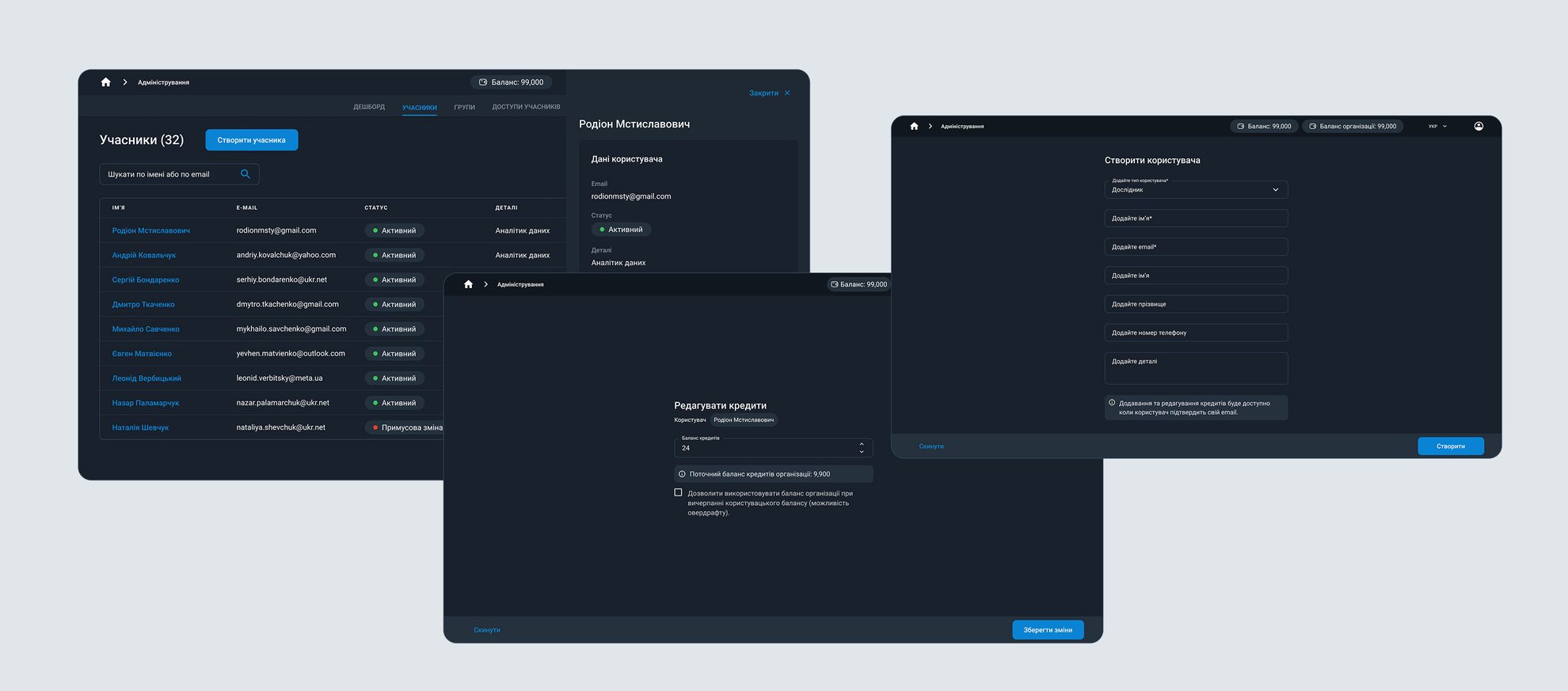
Intelligent Tracking Tool — user administration, roles and credit management screens

Context

Defense analysts had no unified tooling. Threat monitoring was scattered across spreadsheets and manual reports, and the platform needed to serve field analysts, organisational admins, and super admins — each with different access levels and data-sensitivity requirements.

Core challenge

Build a 0→1 product with no design precedent: no prior UX research, no existing component library, and a technically complex domain with no public benchmarks.

Constraints

A security-first architecture where every design decision had to be validated with the CTO — and no public benchmarks to draw from.

Opportunity

Design the full product experience — from information architecture and navigation to the design system — directly influencing product-market fit and helping win contracts.

My role

I was the primary design representative on the project — a hands-on executor across multiple areas: feature delivery, design system governance, and brand support.

3 yr
project duration
~7
web app modules created

As a Lead Designer

  • Helped the CTO shape product vision through interfaces and complex data visualisation
  • Ran regular critique sessions, improving output quality and reducing late-stage revisions

As a Product Designer

  • Designed the full IA, user flows, and UI from zero to production-ready interfaces
  • Built a design system on Material UI with design tokens for seamless theming
  • Embedded in the sprint cycle, decomposing complex features into releasable increments

Results & impact

TIDE Hackathon champion; Brave1 member
MSPO 2025
showcased at Central Europe's largest defense event
NATO
tested in interoperability exercises with allied units

"The accuracy of the collected data, combined with expert analysis and the use of specialised services, led to an impressive outcome — successfully identifying the hostile access point."

Client feedback
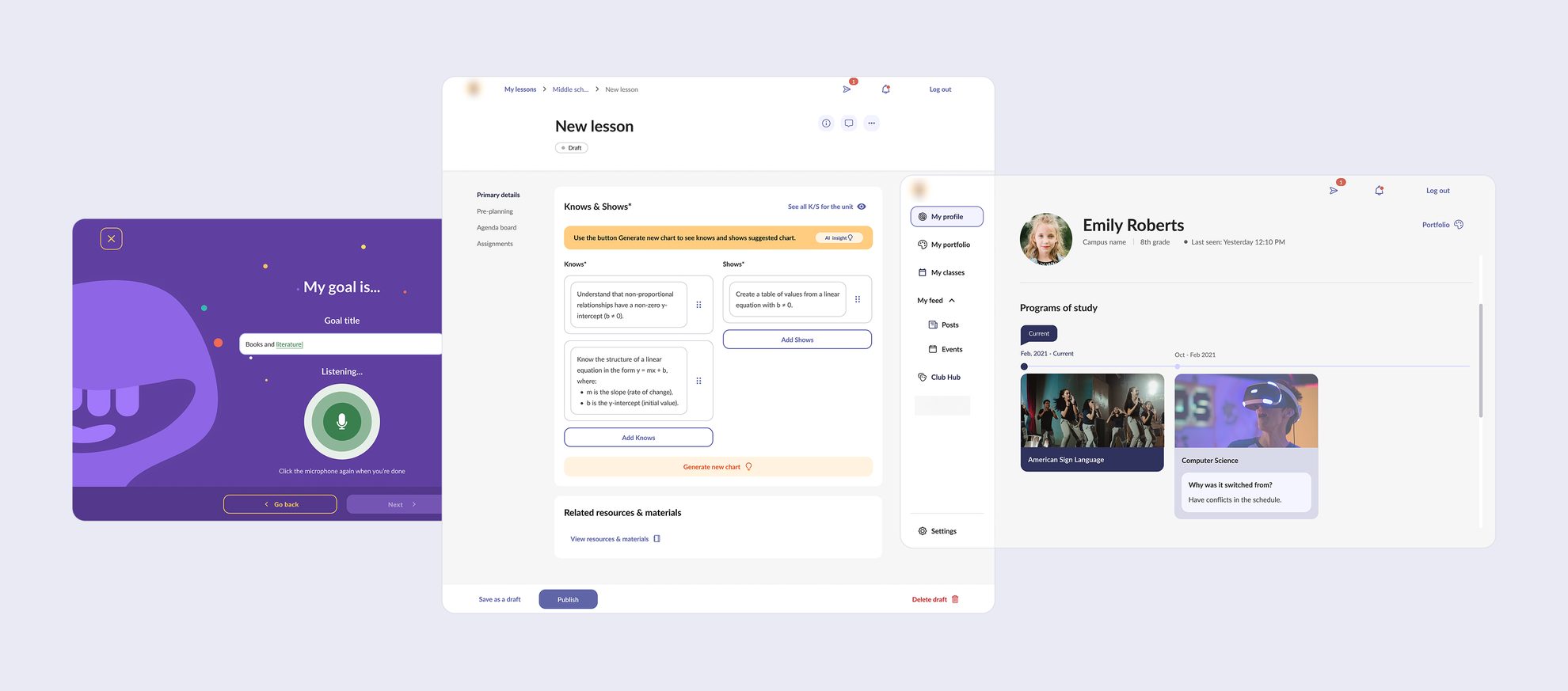
K-12 EdTech — student profile, lesson planning and goal-setting screens

Context

The district had no unified tool for self-discovery or career guidance. Teachers couldn't see what students were interested in, counselors had no district-wide analytics, and students had no structured way to explore their strengths. Every user type faced the same gap — from a different angle.

Core challenge

Design a scalable, multi-role product in an emotionally sensitive domain — balancing student engagement, educator utility, and institutional adoption at the same time.

Constraints

The core concepts — passion, potential, self-discovery — had to feel tangible and measurable enough to drive real decisions for students, parents, and institutions.

Opportunity

Own the full design experience — information architecture, design system, visual direction, and product vision — directly shaping how a district of 51 schools approached career readiness.

My role

I worked as both Lead and Product Designer within cross-functional teams, reporting to the Head Designer. I owned large chunks of work end-to-end — decomposing them with developers into actionable iterations that landed on the roadmap and shipped.

6 yr
project duration
51
schools in the district

As a Lead Designer

  • Oversaw the full design process from concept to delivery, reporting to the Head Designer
  • Decomposed large initiatives with developers into actionable iterations committed to the roadmap
  • Introduced DesignOps improvements and mentored designers through regular critique sessions

As a Product Designer

  • Designed the full IA, flows, and navigation for a multi-role product
  • Built and maintained an Atomic design system with WCAG 2.1 compliance
  • Conducted primary research: user interviews, usability testing, and focus group sessions
  • Facilitated ideation workshops to explore and validate new product concepts
  • Collaborated with developers on third-party tool integrations (Google Classroom, Eduphoria)

Results & impact

800+
composable assets for product & marketing
51
schools adopting the approach
400+
student interests mapped and explorable via an interactive spatial interface

"A game-changer that caters to the passions and talents of every student."

District Superintendent
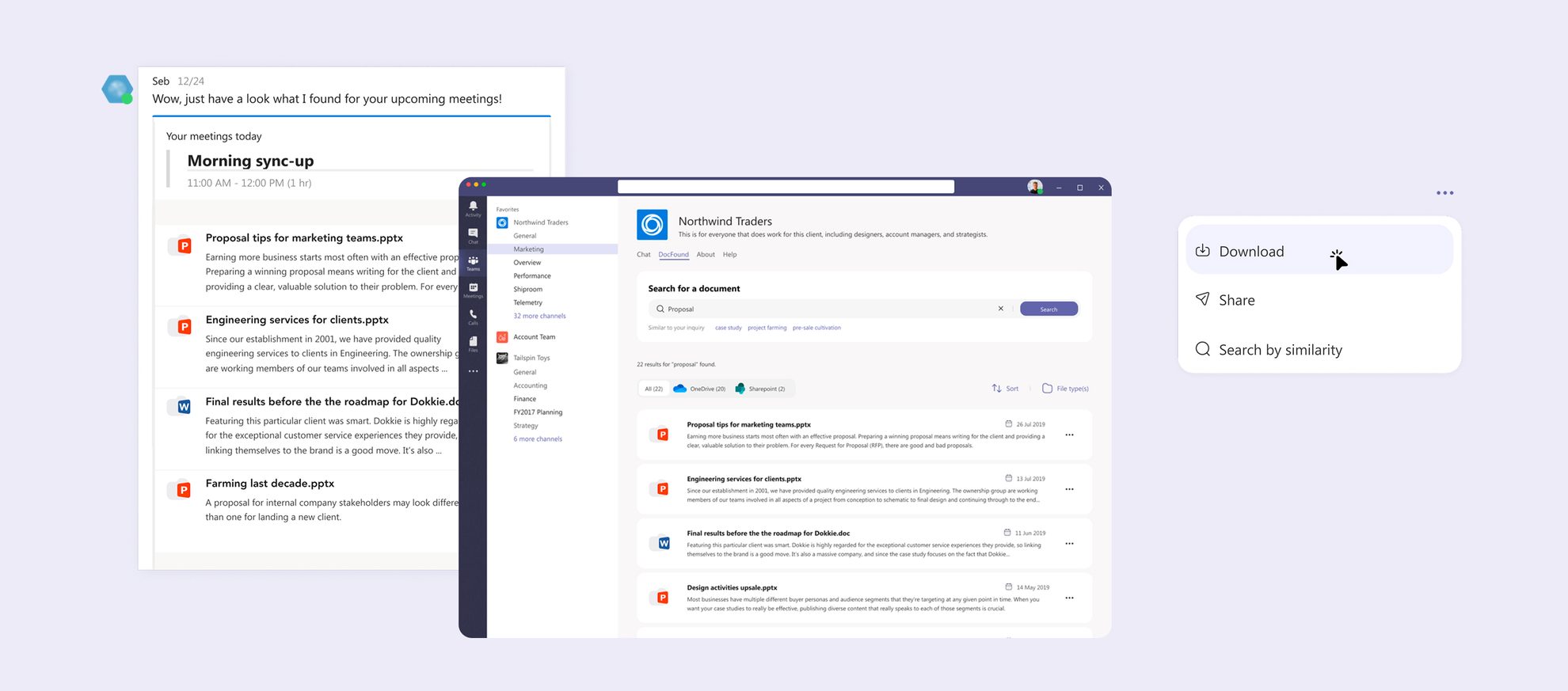
Conversational UI for MS Teams — chatbot, unified search and document actions

Context

This R&D initiative was launched to develop Data Science expertise in a new field: enterprise document search. The team set out to prove that ML-powered contextual and full-text search could be embedded directly into MS Teams, bringing together fragmented sources like OneDrive, SharePoint, and Outlook into one intelligent assistant.

Core challenge

Design a conversational UI from scratch: define interaction patterns, personality, and conversational flows for a rule-based chatbot in a space with no established UX conventions.

Constraints

MS Teams imposed strict design and integration constraints. The conversational flows had to feel natural despite being rule-based, and every decision had to balance actual ML capabilities against user expectations of intelligent behaviour.

Opportunity

Define a new category of enterprise tool — positioning it as a trusted digital partner woven into the daily workflow, not just another search box.

My role

I was the sole designer on the project, responsible for the full process from initial research and ideation through to final UI delivery and stakeholder presentations.

0→1
full product cycle
2
articles published

As a Product Designer

  • Designed conversational flows and interaction patterns where no UX precedent existed
  • Grounded every decision in primary research: user interviews, empathy mapping, and journey mapping
  • Crafted the chatbot's personality (Seb): mapped brand values to tone, response style, and predictive behaviour
  • Presented a proof of concept before committing to any UI — including competitor analysis, use case scenarios, and early interface models

Results & impact

The project became a public case study for SoftServe's R&D practice, documented in two Medium articles. The product is no longer active — the initiative fulfilled its goal of proving the concept and building Data Science expertise in enterprise search.

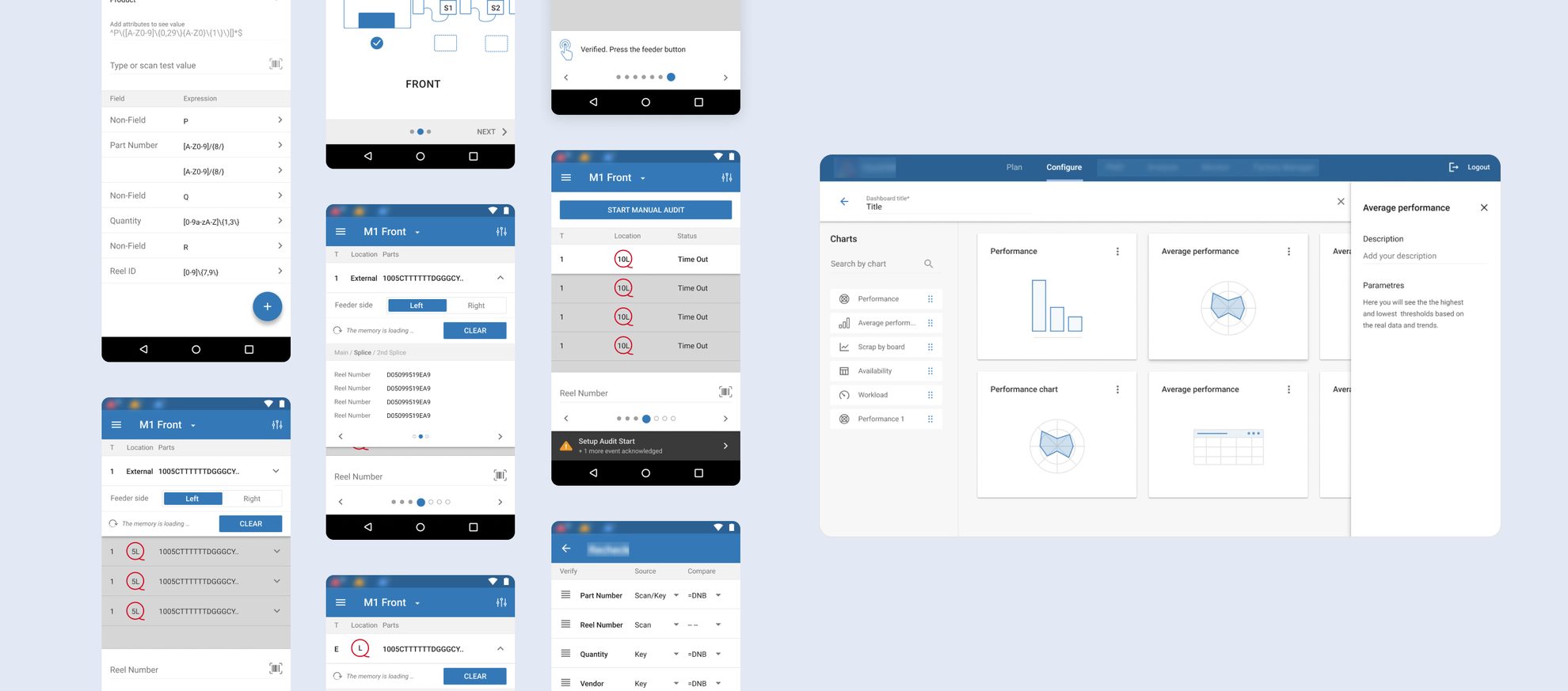
Smart factory — mobile monitoring app screens across the audit, scan, and verification flows

Context

Operators and managers relied on a fragmented, hard-to-use platform with too many steps, inconsistent patterns, and poor visibility into machine status. Floor operators worked with handheld scanners under constant time pressure, while managers needed high-level dashboards and performance analytics.

Core challenge

Redesign a technically complex, multi-module industrial platform — building deep enough domain understanding to reduce friction without disrupting established production processes.

Constraints

All domain knowledge had to be built from scratch through technical documentation, machine schematics, and close collaboration with engineers and domain experts.

Opportunity

Simplify critical operator flows, eliminate redundant steps, and establish a consistent, flexible UI kit — with a direct impact on production-line efficiency.

My role

I was the sole designer in a cross-functional team, responsible for the full scope from initial audit to final UI across both mobile and web.

As a Product Designer

  • Started with a heuristic evaluation using Nielsen's principles and severity ratings, then presented findings and estimates to the client
  • Redesigned critical operator scenarios, reducing the number of steps needed for key actions on the factory floor
  • Rebuilt the mobile app and reworked key web modules: dashboards, operational charts, and a logic expression builder
  • Created a Material Design UI kit optimised for industrial environments and real-time data

Results & impact

2.3×
production output
1.5×
faster process running
−30%
defects
7→2
inventory days
−15%
excess stock

Based on publicly available client case studies, a few years after implementation.

Want the full story?

Interested in more details and the activities behind these case studies? Download the full portfolio — 60 slides walking through process, decisions, and outcomes — along with my CV.

Download full portfolio & CV